This itinerary takes you to discover the grandeur of the great historic Imperial Cities of Morocco: Rabat, Meknes, Fez, and Marrakesh.
For over a thousand years, Morocco has been ruled by Roman, Amazigh, Arab, and French powers.
Each has left their unique cultural, architectural, and historic trace on Morocco.
Grandiose palaces, florid Koranic schools, bustling marketplaces, flowery courtyards, royal boulevards, mighty fortifications, labyrinthal old towns—these are just a few of the many enchanting features of Moroccan urban civilization that you’ll discover on the Imperial Cities Tour.
After picking you up at the airport and checking you into your hotel for one night, we’ll have the rest of the day to discover Morocco’s biggest and richest city: Casablanca.
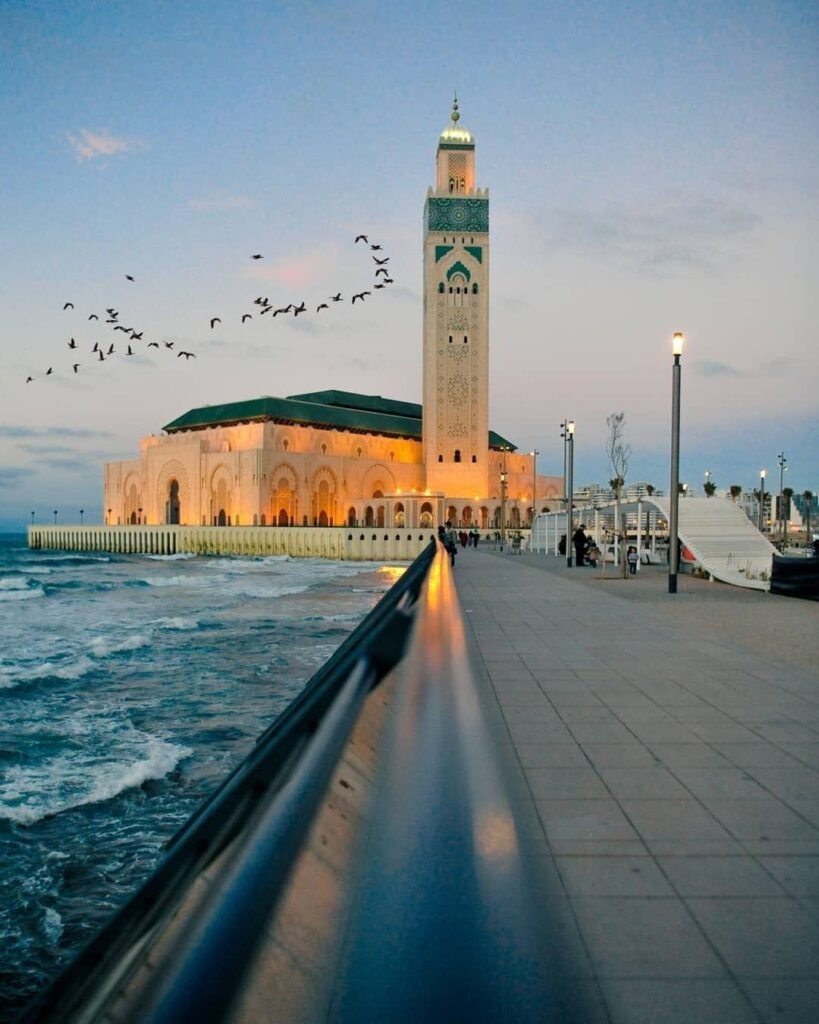
N.B: If you arrive early, we’ll take you on an exclusive tour of the Hassan II Mosque, the largest mosque in Morocco. This stunning architectural marvel is a true symbol of Moroccan craftsmanship, with its intricate details and breathtaking design overlooking the Atlantic Ocean.
After picking you up after breakfast at your accommodation in Casablanca, we will hit the way directly to Rabat.
Depending on how early we start, we can spend more time visiting certain sights than others.
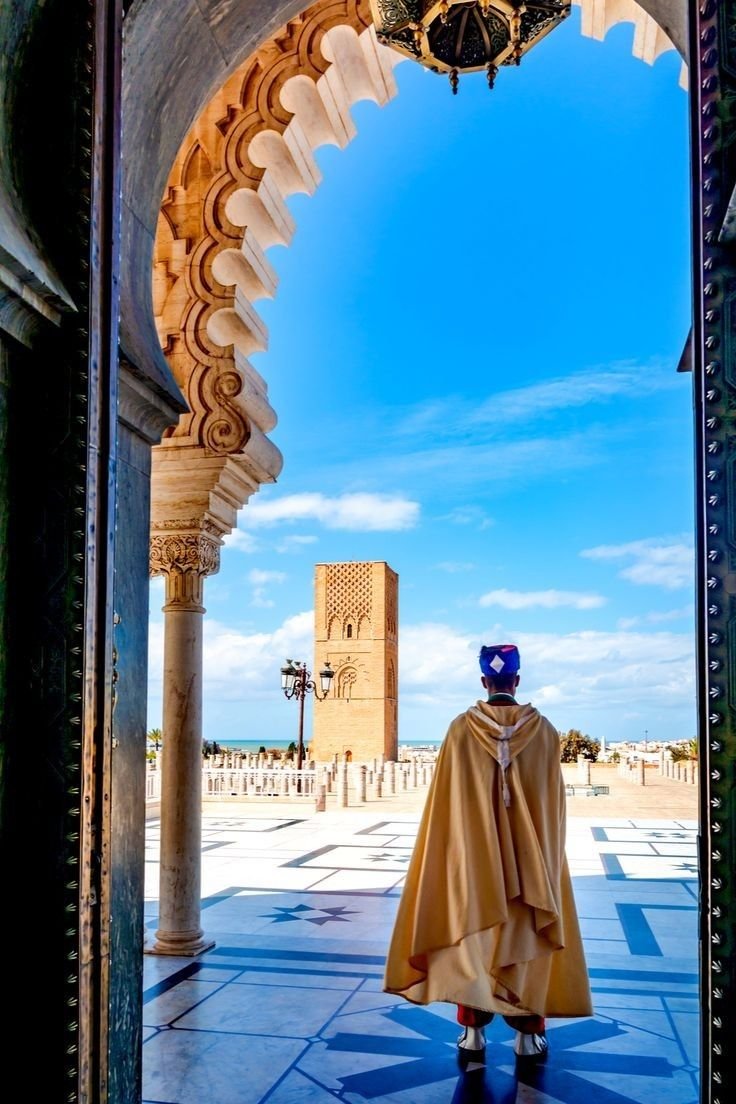
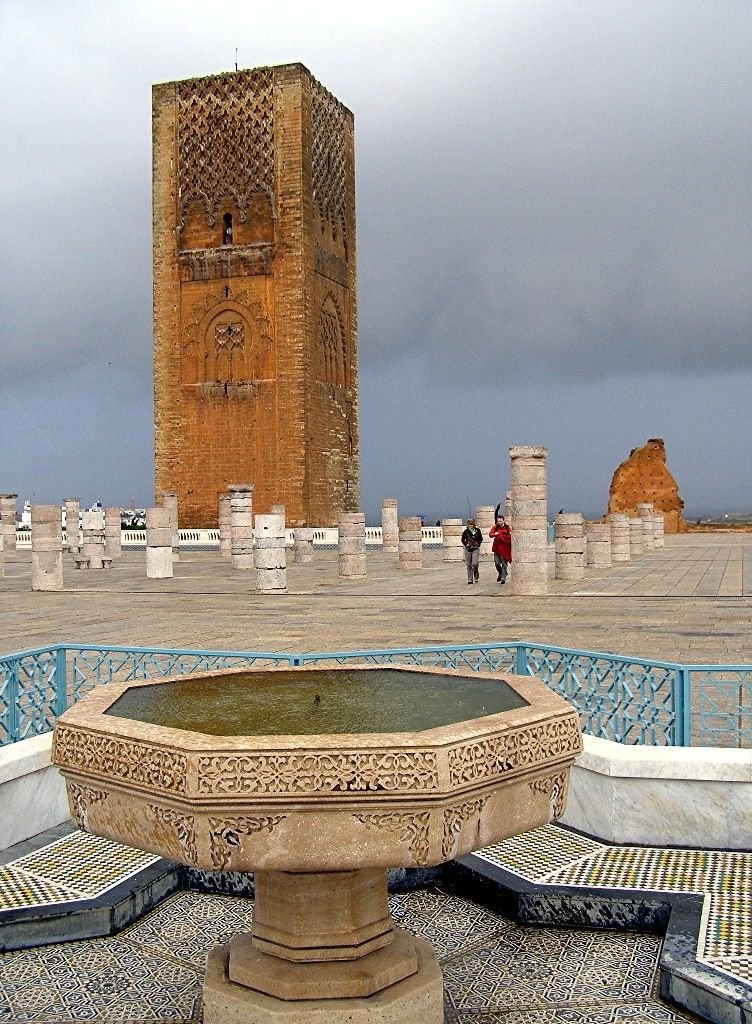
We will begin our exploration of Rabat with a visit to the Hassan Tower and Mausoleum of Mohamed V.
A veritable complex of Moroccan royal history, here we’ll see where Morocco’s past meets its future, completed in 1199 by the Almohad king Yacub al-Mansour, the Hassan Tower, a UNESCO site, and its 200 collapsed columns have stood as a symbol of royal power in Morocco for over 800 years.
Just next to it, one finds the ornately decorated Mausoleum of Mohamed V, the grandfather of the present king and founder of modern Morocco.
You have the option of visiting these sites with or without a local guide.
Next, we will drive to visit the Chella An ancient Roman port city, a Moorish outpost, a fortified necropolis—the Chella of Rabat enjoyed a storied history before becoming the tourist destination it is today.
A winding, unkempt assembly of houses, ruins, streets, and gardens, one wonders if the families of white storks or humans enjoy visiting the Chellah more.
You have the option of visiting this site with or without a guide.
After a stop for lunch at a nice local restaurant, we will move on to visit the Kasabah of the Udayas.
This fortified neighborhood has sat perched over the crashing waves of the Atlantic Ocean since its completion in 1269.
A maze of small streets, ancient stone houses, picturesque doors, and views over the Atlantic Ocean, the Kasabah of the Udayas UNESCO status isn’t just merited by its rich history, but also by its calm beauty.
You have the option of visiting this site with or without a guide.
Then we will discover Rabat’s new town, where Morocco meets the modern world, Rabat’s new city, left behind by the French, features many notable sights all connected by a sleek brand-new tram system: the Bank of Morocco, the Postal Museum, and the Saint Peter Cathedral Adjacent to this neighborhood, we find Rabat’s old city.
After a long day of discovering Rabat, we will take you to your accommodation in Rabat.
Leaving Rabat, we will drive to Meknes where we’ll spend the day before heading to Fez to spend the evening.
Our First stop will be the mighty walled Imperial City of Meknes.
Meknes’s old city offers a trove of sights for a curious visitor: Moulay Ismail’s massive stables, capacious granary, and cavernous underground prison.
We will also visit Moulay Ismail’s mausoleum (one of the only mosques in Morocco open to tourists), the monumental Mansour Gate, the covered food market, and the El Hidem Square.
Next we will make a quick stop in the adjacent small town of Moulay Idriss Zerhoun. During this stop, we will go to a panoramic view point, visit the town center, and get lunch, a snack, or a beverage.
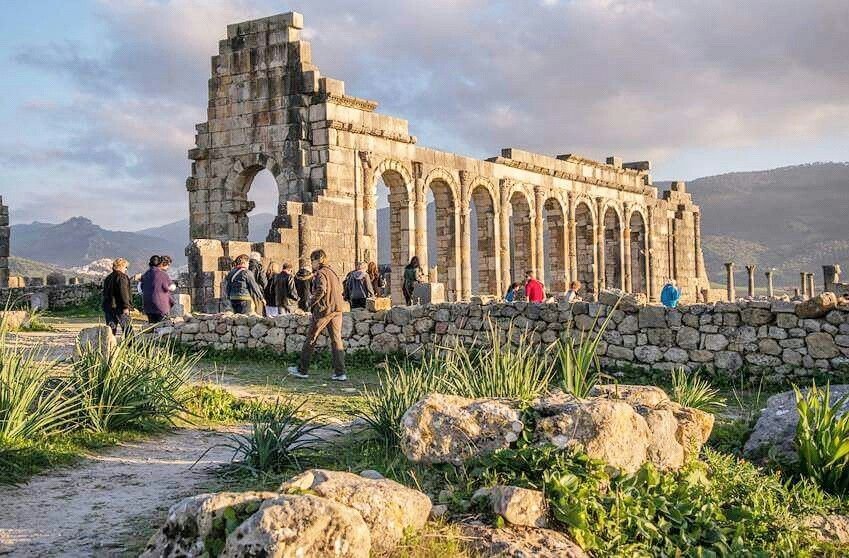
Our last stop will be the ruined Roman city of Volubilis.
French archeologists began excavating Volubilis in the early 20th century, though half of the immense sight still remains beneath centuries of topsoil.
Marvel at the famous sights, like the basilica, the triumphal arc, and the many palaces with their exquisite mosaics. The tour of Volubilis can be done either with or without a local guide.
Once finished with this busy day of sightseeing, we will take the highway to Fez.
We will begin at the Seven Golden Doors, a magnificent set of ornate gates that mark the entrance to the Royal Palace. From there, you’ll stroll through the Jewish Quarter (Mellah), offering a glimpse into Morocco’s rich Jewish heritage and history.
Next, head to a panoramic viewpoint where you can take in a breathtaking view of Fez, with its sprawling medina below, surrounded by mountains.
Then we’ll visit the Ceramics area, renowned for its stunning pottery and traditional craftsmanship.
Finally, we’ll return to explore Fez’s ancient medina, the biggest urban car-free zone in the world. Fez, a UNESCO sight, is a massive labyrinth of dusty alleys, sumptuous houses and palaces, hectic markets, and innumerable stories.
The joy of visiting Fez consists largely in simply meandering through this medieval urban maze.
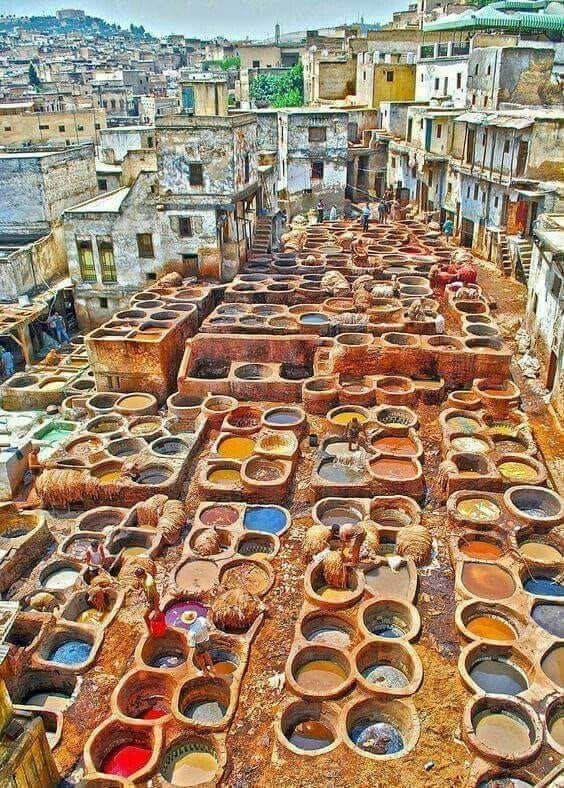
Among the many things we’ll discover are the recently restored leather tanneries, the Foundouk Nejjarine woodworking museum, the Dar el-Magana water clock, the hilltop Merenid Tombs, the serene Bou Inania Koranic school, the Moulay Idriss II Mausoleum, and the Karaouiyne University (the oldest university in the world).
– Today we’ll spend the whole day exploring the legendary red city of Marrakesh.
Highlights include:
– Marrakesh’s old medina – Smaller than the Fez medina, but no less riveting, Marrakesh’s old medina feels worlds away from the fancy modern hotels, clubs, and restaurants that gild its new town.
Main attractions in Marrakesh’s old medina include the Mellah (Jewish neighborhood), the ornate 19th century Bahia Palace, and the crumbling 16th century Badi Palace.
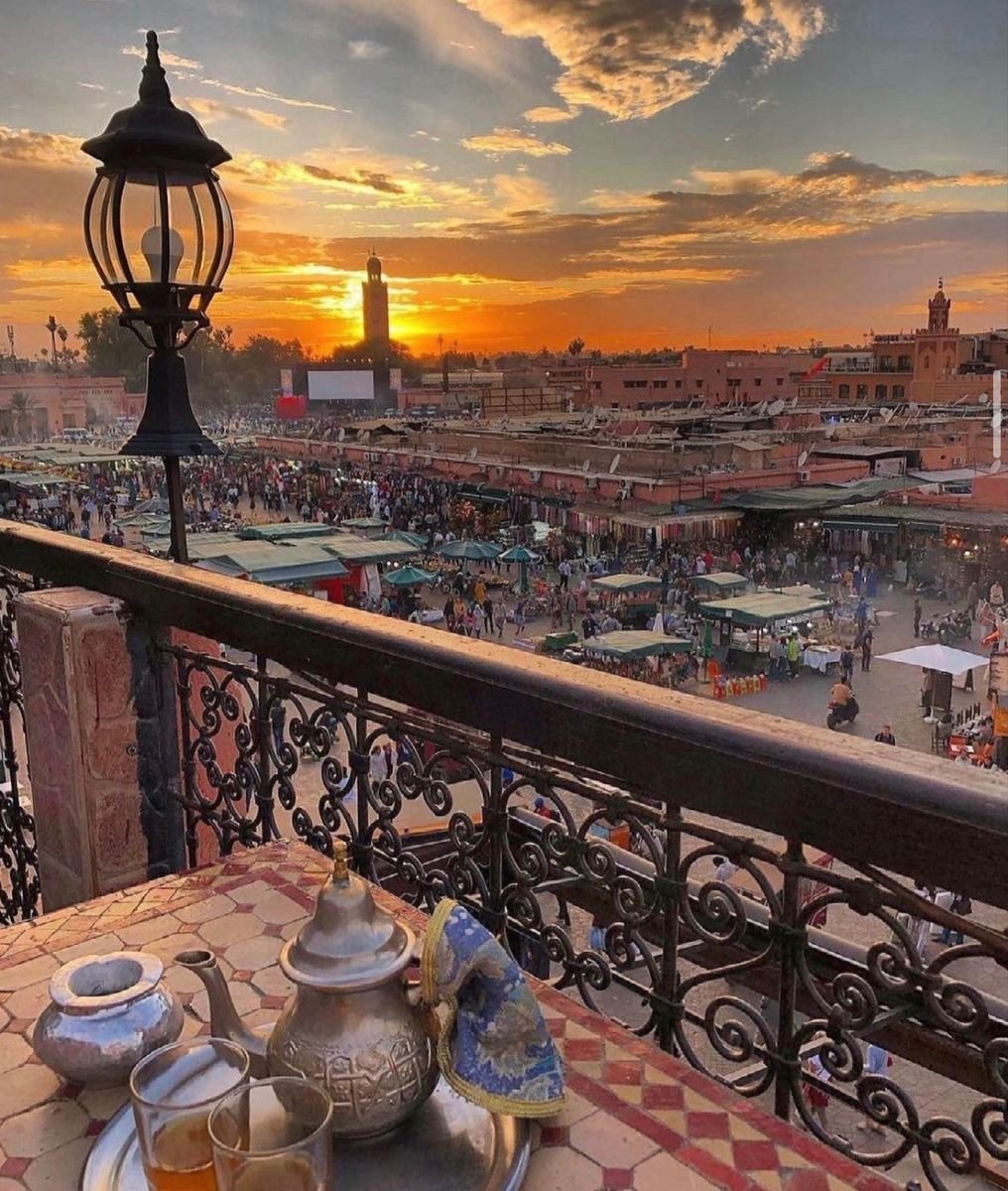
What’s more, we’ll explore the Koutoubia Mosque and the world famous Jemma el-Fna, a UNESCO site, with its fabled snake charmers, monkey tamers, acrobats, musicians, orange juice sellers, and story tellers.
– The Majorelle Gardens – Taking a little excursion into Marrakesh’s new town, we’ll visit the lush Majorelle Gardens.
Designed by the French artist Jacques Majorelle in the 1920s and 1930s, the Majorelle Gardens feature a striking array of cactus species from all over the world in Art Deco inspired grounds.
Famous for its iconic blue walls, the Majorelle Gardens also house an excellent museum devoted to Berber culture and history.
Leaving Fez, we’ll drive to Marrakech while making stops in the rural towns of Azrou and Beni Mellal along the way.
You’ll enjoy watching the beautiful scenery change as we pass through different natural environments.
First, we will pass through the alpine climate of Middle Atlas Mountains, with rich natural features, such as oak and cedar trees, lakes, and Barbary ape colonies.
We will visit Azrou – Situated at about 1,250 meters above sea level, Azrou is a lush small town surrounded by green oak and cedar trees.
Historically the capital of the Middle Atlas region, it has recently lost much of its luster to nearby Ifrane.
Home to a predominately Berber population, Azrou also homes another inhabitant in the hills of trees surrounding it:
Barbary apes! Maybe we’ll get lucky and see a few.
On the last day of our exciting tour through the Imperial Cities of Morocco, we will drop you off anywhere you’d like in Morocco (Rabat/Casablanca/Marrakech).


There are no reviews yet. Be the first one to write one.

Duis aute irure dolor in reprehenderit in voluptate velit esse cillum dolore eu fugiat nulla pariatur.
Excepteur sint occaecat cupidatat non proident, sunt in culpa qui officia deserunt mollit anim id est laborum.
Join our community of over 200,000 global readers who receive emails filled with news, promotions, and other good stuff.