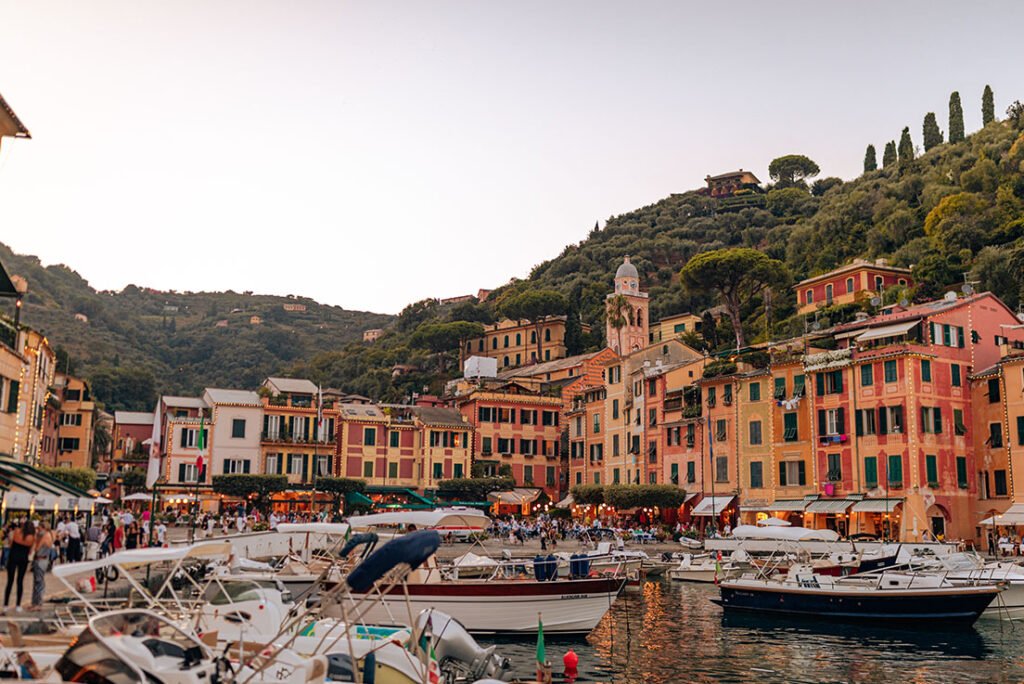
This 13-days tour of Morocco offers an incredible journey through Morocco, setting out from Fez towards the astonishing Merzouga desert passing by Marrakech and other fabulous stations.
After picking you up at the airport and checking you into your hotel, we’ll have the rest of the day to discover: Fez.
If you arrive early, our driver will suggest a few interesting places for you to visit in Fez. This will give you the opportunity to get familiar with the surroundings and fully prepare for the exciting tour the following day.
We will begin at the Seven Golden Doors, a magnificent set of ornate gates that mark the entrance to the Royal Palace. From there, you’ll stroll through the Jewish Quarter (Mellah), offering a glimpse into Morocco’s rich Jewish heritage and history.
Next, head to a panoramic viewpoint where you can take in a breathtaking view of Fez, with its sprawling medina below, surrounded by mountains.
Then we’ll visit the Ceramics area, renowned for its stunning pottery and traditional craftsmanship.
Finally, we’ll return to explore Fez’s ancient medina, the biggest urban car-free zone in the world. Fez, a UNESCO sight, is a massive labyrinth of dusty alleys, sumptuous houses and palaces, hectic markets, and innumerable stories.
The joy of visiting Fez consists largely in simply meandering through this medieval urban maze.
Among the many things we’ll discover are the recently restored leather tanneries, the Foundouk Nejjarine woodworking museum, the Dar el-Magana water clock, the hilltop Merenid Tombs, the serene Bou Inania Koranic school, the Moulay Idriss II Mausoleum, and the Karaouiyne University (the oldest university in the world).
After a morning pick up at your hotel in Fez, we will hit the road heading west.
You decide which route we take: the highway, or take the scenic route with opportunities for taking pictures of the Oulad Shaker reservoir and the surrounding rolling countryside dotted with wheat fields, olive groves, fruit trees, and vineyards.
Our first stop will be the ruined Roman city of Volubilis. French archeologists began excavating Volubilis in the early 20th century, though half of the immense sight still remains beneath centuries of topsoil.
Marvel at the famous sights, like the basilica, the triumphal arc, and the many palaces with their exquisite mosaics.
The tour of Volubilis can be done either with or without a local guide.
Next we will make a quick stop in the adjacent small town of Moulay Idriss Zerhoun. During our stop in Moulay Idriss Zerhoun we will go to a panoramic view point, visit the town center, and get lunch, a snack, or a beverage.
Our last stop will be the mighty walled Imperial City of Meknes.
Meknes’s old city offers a trove of sights for a curious visitor: Moulay Idriss’s massive stables, capacious granary, and cavernous underground prison. We will also visit Moulay Idriss’s mausoleum (one of the only mosques in Morocco open to tourists), the monumental Mansour Gate, the covered food market, and the El Hidem Square.
Following our visit of Meknes, we will set out North towards the mountains to reach Chefchaouen before the sun sets. We will spend the night in beautiful Chefchaouen.
Today we will explore Chefchaouen in the morning before heading north to the town of M’diq on the Mediterranean coast in the afternoon.
Nestled in a green mountain valley at 600m above sea level, Chefchaouen was originally built up as a hidden outpost to push back the increasing incursions of European powers into Morocco starting in the 15th and 16th centuries. After the Reconquista and fall of Islamic rule in Spain, Muslim Andalusian refugees flocked to Chefchaouen to begin new lives on the African continent.
Until the middle of the 20th century, when Spanish rule of northern Morocco began, Chefchaouen had held a reputation for being impossible for non-Muslims to enter.
Today, that’s all different: tourists just can’t get enough of Chefchaouen’s innumerable charms.
Much calmer and cozier than Fez, Chefchaouen’s most striking feature is, without a doubt, its old city’s picturesque sky blue painted walls and streets built on a mountainside.
Among the major sights in Chefchaouen are the Kasabah (fortress), the Ras El Maa river valley, and the hillside Spanish Mosque (a 30 minute hike from town).
Chefchaouen can be explored with or without a guide.
Once completing your visit, we will drive to your accommodation in Chefchaouen.
Leaving Chefchaouen early in the morning, we will hit the road to reach Tangier and explore its surrounding sites, like Cape Spartel and the Caves of Hercules.
Our drive will take us north, over the mountains, to where the Mediterranean Sea and Atlantic Ocean meet.
We will drive by the UNESCO protected old medina of Tetouan, with the possibility of a short visit.
Continuing north, we will reach Tangier before noon, where we will begin visiting the fascinating area.
First, we will drive out of town to make a stop at the scenic Cape Spartel, where, on a clear day, you may even catch a glimpse of British Gibraltar and the European continent in the distance.
Cape Spartel is one of the northernmost points in Africa—truly where the edges of two worlds meet!
In ancient times, it was thought the lost continent of Atlantis sank into the Atlantic Ocean, not far from Cape Spartel.
Going down from Cape Spartel, we will visit the majestic Caves of Hercules, carved over centuries out of the rock by both nature and man.
In ancient times, it was thought that Hercules slept in this cave before completing his 11 labor, which explains why the caves still carry his name.
In the afternoon, we will return to Tangier, where you will have the rest of the day to explore its historic old medina.
Famous sites in the old medina include the Kasbah fortress and the American Legation, one of the first international American diplomatic posts, which today houses a cultural center and museum.
After picking you up after breakfast at your accommodation in Tangier, we will hit the way directly to Rabat.
Depending on how early we start, we can spend more time visiting certain sights than others.
We will begin our exploration of Rabat with a visit to the Hassan Tower and Mausoleum of Mohamed V.
A veritable complex of Moroccan royal history, here we’ll see where Morocco’s past meets its future, completed in 1199 by the Almohad king Yacub al-Mansour, the Hassan Tower, a UNESCO site, and its 200 collapsed columns have stood as a symbol of royal power in Morocco for over 800 years.
Just next to it, one finds the ornately decorated Mausoleum of Mohamed V, the grandfather of the present king and founder of modern Morocco.
You have the option of visiting these sites with or without a local guide.
Next, we will drive to visit the Chella An ancient Roman port city, a Moorish outpost, a fortified necropolis—the Chella of Rabat enjoyed a storied history before becoming the tourist destination it is today.
A winding, unkempt assembly of houses, ruins, streets, and gardens, one wonders if the families of white storks or humans enjoy visiting the Chellah more.
You have the option of visiting this site with or without a guide.
After a stop for lunch at a nice local restaurant, we will move on to visit the Kasabah of the Udayas.
This fortified neighborhood has sat perched over the crashing waves of the Atlantic Ocean since its completion in 1269.
A maze of small streets, ancient stone houses, picturesque doors, and views over the Atlantic Ocean, the Kasabah of the Udayas UNESCO status isn’t just merited by its rich history, but also by its calm beauty.
You have the option of visiting this site with or without a guide.
Then we will discover Rabat’s new town, where Morocco meets the modern world, Rabat’s new city, left behind by the French, features many notable sights all connected by a sleek brand-new tram system: the Bank of Morocco, the Postal Museum, and the Saint Peter Cathedral Adjacent to this neighborhood, we find Rabat’s old city.
After a long day of discovering Rabat, we will take you to your accommodation in Casablanca.
After breakfast at your hotel, we’ll take you to explore one of the most iconic sights in Casablanca. the Hassan II Mosque, the largest mosque in Morocco. This stunning architectural marvel is a true symbol of Moroccan craftsmanship, with its intricate details and breathtaking design overlooking the Atlantic Ocean.
Essaouira came to the forefront of history during the European Age of Exploration when nations, like Portugal, Spain, France, and England, all jockeyed for control over the port of Essaouira.
By the 18th century, Moroccans had firmly wrested back control of Essaouira.
Because Muslims were prohibited from conducting trade with the Christian enemy, the Jews of Essaouira acted as commercial intermediaries between the two groups and grew very rich.
As such, Essaouira features one of the most important Jewish neighborhoods, or Mellah, in Morocco.
Today, Essaouira’s Mellah has emptied of its original inhabitants and, like most across Morocco, is collapsing from neglect, risking the loss of this important chapter in Moroccan history.
After visiting the Mellah, we will discover other important sights in the Essaouira old city, such as the jewelry market, the port, and the fish market.
Speaking of fish, Essaouira is a great place to get a delightful fresh seafood lunch.
In the afternoon we will orient ourselves towards Essaouira’s massive sandy beaches where it’s possible to do a number of different activities.
Camel riding, horseback riding, quadbike riding, swimming, surfing, windsurfing, or just sunbathing—you’re free to enjoy the beach as you wish! If spending time at the beach isn’t your cup of tea, there are other ways we can enjoy our afternoon.
For example, we can explore Essaouira’s rich musical history by learning about Gnawa music (did you know the Jimi Hendrix and Jimmy Page both spent time in Essaouira learning about traditional Moroccan music?).
Today we’ll spend the whole day exploring the legendary red city of Marrakesh.
Highlights include:
– Marrakesh’s old medina – Smaller than the Fez medina, but no less riveting, Marrakesh’s old medina feels worlds away from the fancy modern hotels, clubs, and restaurants that gild its new town.
Main attractions in Marrakesh’s old medina include the Mellah (Jewish neighborhood), the ornate 19th century Bahia Palace, and the crumbling 16th century Badi Palace.
What’s more, we’ll explore the Koutoubia Mosque and the world famous Jemma el-Fna, a UNESCO site, with its fabled snake charmers, monkey tamers, acrobats, musicians, orange juice sellers, and story tellers.
– The Majorelle Gardens – Taking a little excursion into Marrakesh’s new town, we’ll visit the lush Majorelle Gardens.
Designed by the French artist Jacques Majorelle in the 1920s and 1930s, the Majorelle Gardens feature a striking array of cactus species from all over the world in Art Deco inspired grounds.
Famous for its iconic blue walls, the Majorelle Gardens also house an excellent museum devoted to Berber culture and history.
After an early morning pick up at your accommodations, we will begin our exciting day discovering the historic towns that lie in the semi-arid plain on the other side of the High Atlas Mountains.
Leaving Marrakech, the snow covered peaks of the High Atlas Mountains will slowly become more and more visible.
Driving higher and higher, we will encounter the numerous winding switchbacks of the Tizi n’Tichka mountain pass, a marvel of modern engineering and design.
Going down the other side of the High Atlas Mountains, we will veer off the main road to discover the traditional village of Ait Benhaddou, before continuing to the city of Ouarzazate.
In this region we’ll discover villages famous for their distinct mudbrick architecture and preserved fortified town centers (Kasbah).
After about a 45 minute drive, we’ll arrive at the village of Ait Benhaddou, an important UNESCO sight in the region.With its many towers and traditional houses, Ait Benhaddou stands as the most striking example of the pre-Saharan architecture of southern Morocco.
We can have lunch at one of the excellent restaurants overlooking Ait Benhaddou.
Our last stop today will be in the capital of southern Morocco, Ouarzazate.
Like Ait Benhaddou, Ouarzazate boasts an important fortified center, the Taourirt Kasbah.
However, what makes Ouarzazate most famous today are its internationally renowned movie studios.
Taking full advantage of southern Morocco’s beautiful desert landscapes, these studios have contributed to Hollywood blockbusters, such as The Mummy, Gladiator, and Lawrence of Arabia, just to name a few.
Leaving Ouarzazate, we will pass through the Dades Valley, a region famous for its sprawling palm groves growing over an underground river.
Along our way, we’ll visit the famous little town of Kelaat Mgouna, known across Morocco for its traditional Rose Festival in May.
By the end of this long day, we will arrive in the town of Boumalne Dades where we will spend the night in a traditional Kasbah hotel.
After leaving our Kasbah in Boumalne Dades in the morning, we will have the rest of the day to explore the towns on our way to the sprawling desert sands of Merzouga.
Our first stop of the day will be in the small town of Tinghir, a small picturesque town where you can get a feel for how locals in this region live.
We’ll also make a short stop at the Todra Gorges where you can enjoy the marvelous canyons on foot.
Continuing on our way, you’ll notice how the landscape gets more and more arid, as the temperature gets hotter and hotter, as we make our way away from the mountains and towards the desert.
We’ll pass through the town of Erfoud, where we’ll stop for lunch and to visit a fossil museum, before reaching the historical town of Rissani, where we’ll get out and explore for an hour or so with a local guide.
After our little tour of Rissani, we’ll drive directly towards the desert to get to Merzouga, one of the last towns before the end of the road and the beginning of the desert.
In Merzouga, a camel caravan will be waiting to take us over the sand dunes to our Berber camp deep in the Sahara Desert.
Here your Berber hosts will cook traditional desert meals for you, while teaching you about their culture.
Spend the evening huddled around the campfire, venture out into the desert, or lie on a sand dune and gaze at the stars.
On our last day together, you will have the opportunity to wake up early and catch the beautiful desert sunrise from atop of a sand dune.
After breakfast, we will hike out of the desert on camelback to reach our van in Merzouga.
After giving you the opportunity to shower and freshen up, we will hit the road to get to Fez before the evening.
Our first stop on today’s itinerary will be in the town of Azrou, the ancient capital of the Amazigh people in the Middle Atlas Mountains region.
Situated at 1,250m above sea level, Azrou finds itself nestled cozily in the surrounding hills of the Middle Atlas Mountains.
Famous for its cedar forests, butterflies, and Barbary ape population, Azrou is a perfect place to get back to nature.
During our time in Azrou, we will stop outside of the town to explore this beautiful natural environment.
Climbing higher into the Middle Atlas, passing through oak forests, the next stop on our drive will be in the famed ‘Switzerland of Morocco’, the town of Ifrane, famous for the world renowned Al-Akhawayn University, which attracts the best and brightest of Morocco each year.
We will also make a stop at the Ifrane National Park to admire the ancient cedar trees and try our luck at finding a colony of Barbary apes.
Our last stop will be in the provincial town of Imouzzer, which is famous for its Apple Festival in September. Many of the inhabitants of Imouzer are of Amazigh descent and speak a language different from Arabic as their mother tongue.
The area around Imouzzer is dotted with lakes that were carved out during a period of intense volcanic activity in the distant past. Stopping at one of these lakes, Dayet Aoua, you will have the opportunity to go for a quick horse or donkey ride on the lakeshore.
Leaving Imouzer, we will drive directly to Fez to get you to your accommodations at a reasonable hour.
On the last day of our exciting tour through Morocco, we will drop you off anywhere you’d like in Morocco (Rabat/Casablanca/Marrakech).





There are no reviews yet. Be the first one to write one.

Duis aute irure dolor in reprehenderit in voluptate velit esse cillum dolore eu fugiat nulla pariatur.
Excepteur sint occaecat cupidatat non proident, sunt in culpa qui officia deserunt mollit anim id est laborum.
Join our community of over 200,000 global readers who receive emails filled with news, promotions, and other good stuff.